The explosive growth in computing power demand within contemporary data center environments, particularly in support of intensive applications like Artificial Intelligence (AI), machine learning, and hyperscale cloud infrastructure, has led to a dramatic escalation in rack power density. This trend has directly created the Urgent Need for High-Efficiency Water-Cooled Air Conditioning Systems.
As the thermal load per rack continues its sharp climb—with advanced AI server clusters sometimes exceeding 30 kW—traditional air-based cooling methods are unequivocally reaching their physical and economic limits. Under such extreme thermal loads, air cooling not only struggles to effectively remove heat but also significantly drives up operational costs. To sustain the growth of high-density computing while simultaneously optimizing the Power Usage Effectiveness (PUE) to maintain a competitive edge, the adoption of advanced liquid-based thermal management solutions has become essential. Among these, Chilled Water Air Conditioning (CWAC) systems are paramount due to their superior efficiency and sheer cooling capacity. CWAC enables precise and highly effective heat extraction, which is the cornerstone for guaranteeing the long-term stability and reliability of high-density IT infrastructure, while also helping organizations substantially reduce operational expenditures (OPEX).
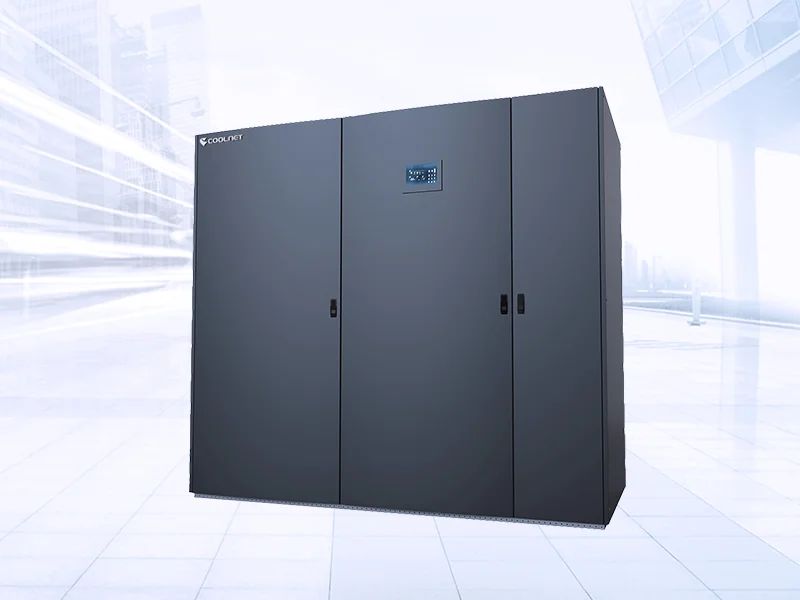
At Coolnet, we deeply understand these extreme thermal requirements, specializing in the engineering and manufacturing of cutting-edge thermal management technology designed to meet the rigorous demands of today’s data centers. Our comprehensive solution portfolio, including the high-capacity CyberMaster series Precision Air Conditioner (PAC) Chilled Water units (with a power range covering 31 point 7 kW to 205 point 6 kW), is specifically engineered for continuous, high-sensible heat removal in mission-critical environments. We are dedicated to providing industry-leading cooling efficiency and unwavering reliability.
Core Technologies and Design Advantages of Chilled Water Air Conditioning
Chilled Water Air Conditioning systems distinguish themselves by using water, a medium with superior thermal properties, rather than a refrigerant, as the primary agent for transporting heat away from the IT equipment. The cooling is centralized, achieved via highly efficient chillers and often coupled with external cooling towers.
Core Technologies:
Centralized Chiller Plant and Distribution: A central chiller plant is responsible for generating the vast amount of cold water (chilled water) required. This water is then pumped through the facility via a closed-loop system to the cooling units.
PAC Coil Heat Exchange: Inside the data hall, specialized Precision Air Conditioning (PAC) units, such as the CyberMaster series PAC CW unit, contain a large heat exchanger coil. Warm air exhausted by the IT equipment passes directly over this coil, facilitating the transfer of heat directly to the circulating cold water.
Water’s High Specific Heat Capacity: Water’s innate ability to absorb and transport large amounts of heat efficiently is key. This means that CWAC systems are capable of handling significantly higher heat loads per unit of volume than comparable air- or DX-based systems, making them highly scalable for future growth.
Design Advantages:
Exceptional Scalability: Chilled water systems are inherently flexible and scalable. Facility expansion is straightforward, typically achieved by adding chiller capacity at the central plant and deploying more internal PAC units without requiring wholesale system overhauls or significant disruption to existing operations.
Optimized Internal Space: By locating the main heat rejection equipment (chillers, cooling towers) outside the data hall, valuable internal white space is preserved for revenue-generating IT equipment, optimizing the financial return per square foot.
Environmental Adaptability: The system architecture allows for high flexibility in heat rejection, supporting various external plant configurations, including dry coolers, adiabatic coolers, and cooling towers. This adaptability ensures optimal year-round performance across diverse geographical climates.
Energy Efficiency Improvement and Energy-Saving Characteristics of Chilled Water System Data Centers
The adoption of a chilled water system data center is heavily motivated by its superior energy-saving characteristics, which directly and positively impact the data center’s PUE measurement.
Water-Side Free Cooling Capability: This is one of the most powerful energy-saving features of CWAC systems. When the ambient outside temperature drops below a specific set point, the system can bypass or significantly throttle the energy-intensive mechanical chillers. Instead, it uses the cold external environment to passively or partially cool the return water. This dramatically reduces electricity consumption, often cutting the annual cooling power use by a significant margin.
High Operating Temperature Support: The latest IT equipment is designed to reliably operate with warmer supply air temperatures. This allows the central chilled water system to deliver water at a higher temperature than previously possible, making the chiller plant operate much more efficiently and reducing compressor workload.
Optimized PAC Performance: Units like the CyberMaster series PAC (31.7-205.6kW) CW unit are purpose-built for high-efficiency heat exchange with chilled water. They minimize the power consumption of internal components (fans and pumps) while ensuring the required airflow and precise temperature and humidity control within the data hall.
Application Value of Intelligent Control, Monitoring, and Multi-Unit Collaborative Management
The full potential for efficiency and stability in a CWAC system is realized through advanced automation, monitoring, and collaborative management.
Intelligent Control and Monitoring: Our CWAC systems integrate fully with a centralized Data Center Infrastructure Management (DCIM) platform. This platform provides continuous, real-time monitoring of all critical hydraulic and thermal parameters, including chilled water temperature, flow rate, pressure differentials, and return air conditions.
Dynamic Flow Adjustment: The system employs variable frequency drives (VFDs) on pumps and fans to precisely adjust water flow and airflow based on the actual thermal load within the data hall. This demand-based response prevents inefficient over-cooling and generates substantial energy savings, particularly in pump operation.
Multi-Unit Collaborative Management: Given the large cooling requirements of modern halls, multiple CyberMaster series PAC CW units are typically deployed. The intelligent control system manages these units collaboratively, ensuring systematic load balancing and sequencing optimization. The system automatically stages units on and off based on facility load and rotational scheduling, ensuring equal wear across all equipment and reliably maintaining N+1 redundancy without requiring constant manual intervention. This collaborative control maximizes system life and prevents costly failures.
Conclusion: Achieving Stable and Efficient Data Center Operation through Water-Cooled Precision Air Conditioning Systems
The demands of high-density computing necessitate a thermal solution that is both powerful and inherently efficient. Coolnet provides the answer with advanced water-cooled precision air conditioning systems.
By implementing solutions like the powerful CyberMaster series PAC (31.7-205.6kW) CW unit, organizations gain the superior cooling capacity, high energy efficiency through free cooling, and intelligent control necessary to maintain a low PUE. This robust, scalable architecture ensures stable and efficient data center operation, preparing your infrastructure for the next generation of power-intensive IT loads.