Data centers are the backbone of modern IT infrastructure, but managing their efficiency is no easy task. A significant challenge faced by data centers is ensuring efficient cooling while minimizing energy usage. Traditional air conditioning systems often struggle with airflow management and energy consumption, but with Coolnet in-row cooling solutions, it’s possible to achieve both higher efficiency and more precise cooling. In this article, we’ll explore the in-row cooling technology and its role in optimizing data center performance.

Challenges in Data Center Cooling: Energy Consumption and Airflow Mismanagement
Traditional cooling solutions like CRAC and CRAH units have long been the standard in data center environments. However, these systems face significant challenges when it comes to energy efficiency. In-row cooling addresses a fundamental issue: the mixing of hot and cold air. As these airflows collide, cooling efficiency decreases, and power usage effectiveness (PUE) suffers. In modern high-density racks, traditional methods fail to deliver the precise cooling needed.
What is In-Row Cooling?
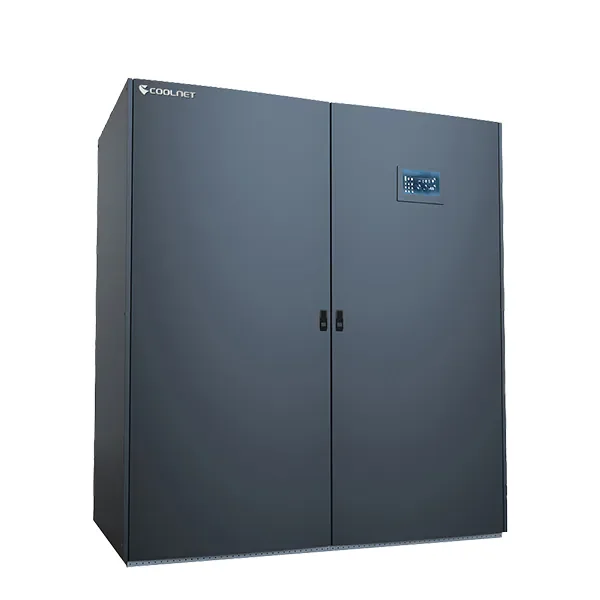
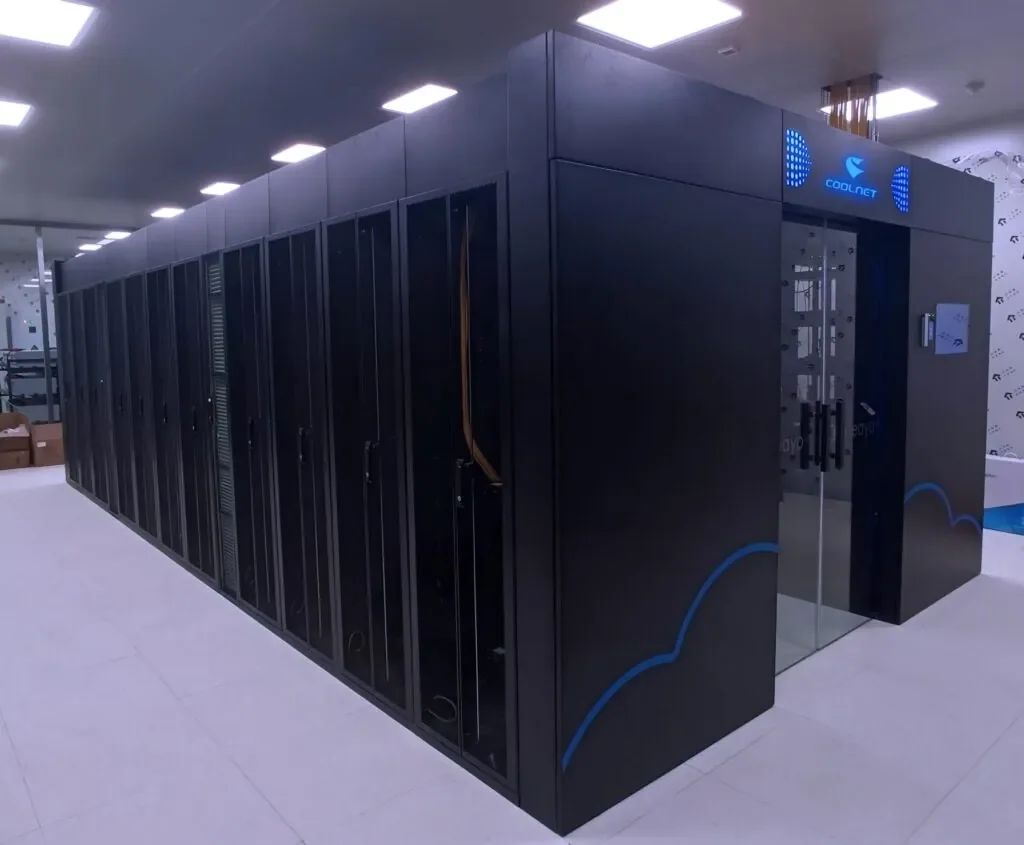
In-row cooling refers to a method of cooling IT equipment by placing cooling units between the server racks. This setup ensures that cooling is applied directly where it’s most needed, right next to the heat-generating components. Unlike traditional cooling systems that operate at the room level, in-row cooling data centers use the concept of close-coupled cooling. This efficient design allows for better management of hot and cold air, avoiding wasteful air mixing.
The Airflow Advantages of Coolnet In-Row Cooling
The Coolnet In-Row Cooling systems are designed with horizontal and side airflow to align with the server racks’ layout. This ensures optimal cooling by delivering cold air directly to the IT equipment while isolating hot and cold air streams. With this approach, the systems seamlessly integrate into the cold aisle containment of the data center. By minimizing the interaction between hot and cold air, we significantly reduce cooling loss, which directly contributes to higher operational efficiency.
Improving Energy Efficiency: Why PUE is Reduced
One of the key advantages of the Coolnet in-row cooling system is its ability to drastically reduce the PUE (Power Usage Effectiveness). Within in-row cooling data centers, the cold air is delivered straight to the IT equipment, ensuring that there’s no wasted cooling energy. The combination of EC fans and inverter compressors in the Coolnet systems optimizes energy usage. This synergy results in a 20-30% improvement in cooling efficiency compared to traditional air conditioning setups.
Design for High Reliability and Continuous Operation
Another critical aspect of Coolnet in-row cooling is its design for high reliability. These systems are built for 24/7/365 operations, meaning they can run continuously without issue. The systems meet the rigorous standards of Tier III and Tier IV data centers, ensuring uptime and reliability. Additionally, the integrated monitoring and self-diagnosis systems provide real-time feedback and proactively address potential issues, making maintenance less of a concern.
Conclusion: In-Row Cooling as the Future of High-Density Data Centers
As data center demands continue to grow, the need for more efficient, scalable cooling systems becomes evident. Coolnet in-row cooling systems offer a strategic solution to these challenges, providing both energy efficiency and precision in managing airflow. With its ability to handle high-density environments and improve PUE, in-row cooling is increasingly becoming the preferred choice for modern data centers. As organizations look to optimize their infrastructure, in-row cooling systems are not just a trend; they are the future of efficient, high-performance data center management.