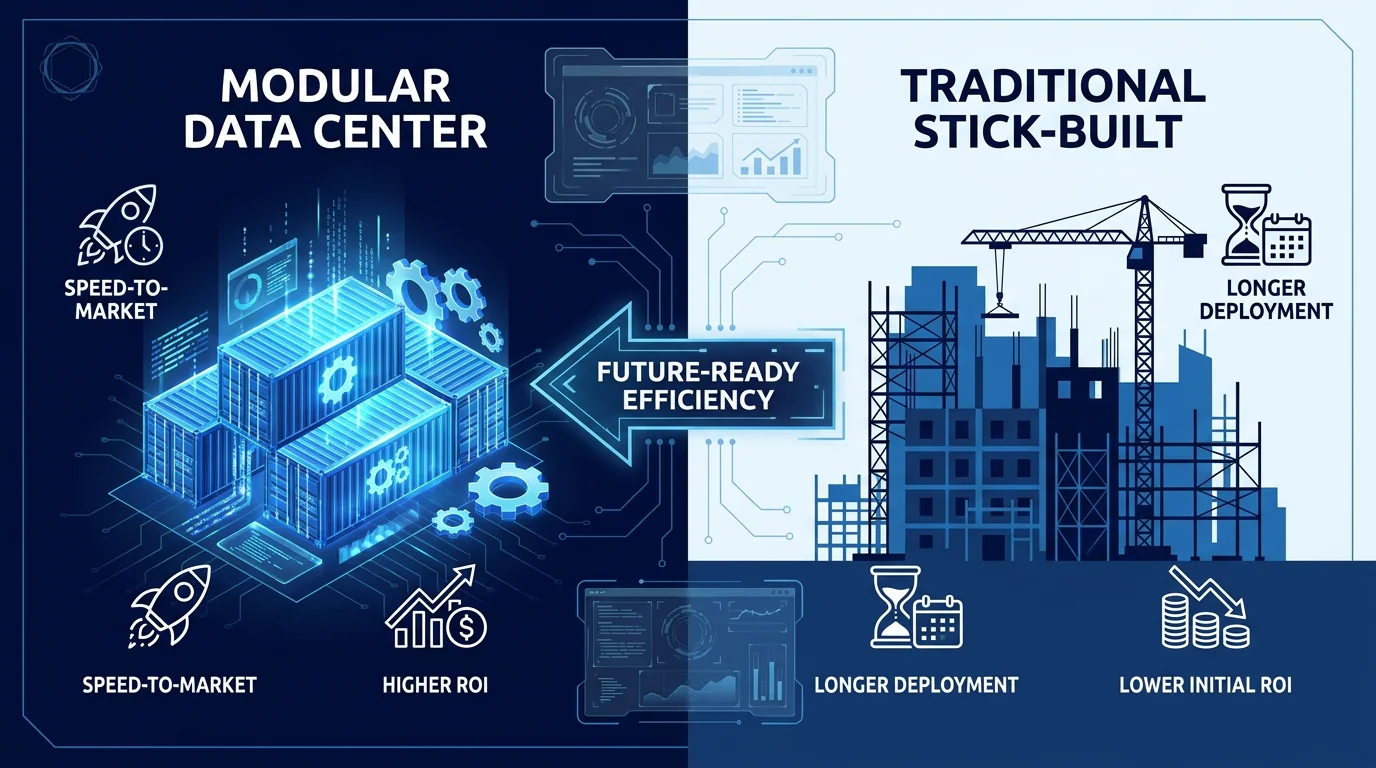
Key Takeaway: Deploying compute infrastructure in unstaffed, extreme outdoor environments requires moving beyond basic weatherproof boxes. Purpose-built rugged container data centers rely on validated ingress protection (IP66/NEMA 4X), rigorous environmental testing (IEC 60068 and MIL-STD-810), and hybrid microgrid architecture to maintain 99.999% availability without local utility support.
Table of Contents
ToggleIntroduction
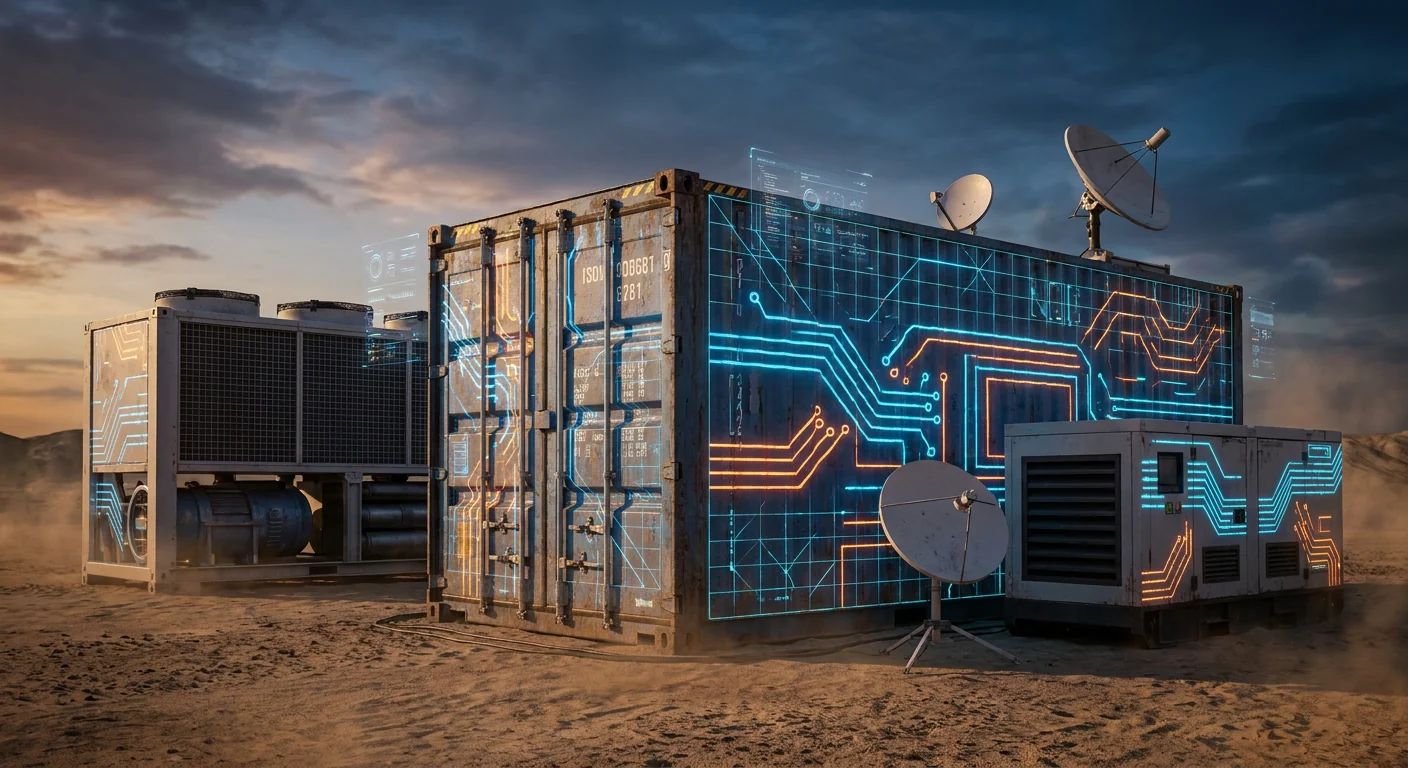
A ruggedized container data center is a fully factory-prefabricated, self-contained compute environment engineered into a reinforced ISO shipping container frame or custom structural enclosure. Unlike conventional indoor IT rooms or basic weatherproof outdoor enclosures, a ruggedized container integrates IT server cabinets, high-density precision cooling, uninterruptible power supply (UPS) systems, automated fire suppression, intelligent power distribution, and physical security into a single mobile asset.
Remote edge deployments—ranging from desert solar farms and offshore drilling platforms to isolated telecom towers—face harsh physical conditions where municipal utilities, clean water, and on-site technical personnel are absent. Operating enterprise compute in these unstaffed locations creates severe operational risks: extreme ambient heat causes thermal throttle, airborne dust fouls heat exchangers, coastal salt mist corrodes electrical contacts, and unconditioned generator power creates harmful voltage spikes.
To guarantee operational continuity, engineering teams must evaluate container infrastructure against international validation standards. Factory certification under recognized testing frameworks ensures structural survivability during transport, sustained ingress resistance during high-wind rainstorms, and thermal stability across zero-touch deployment lifecycles.
Field applications for rugged container data centers span critical global sectors:
Telecommunications & 5G Edge: Centralized processing nodes and base stations in rural or mountainous terrain requiring zero-downtime edge compute.
Mining & Earth Extraction: Heavy-duty compute modules deployed directly at mine pit heads for real-time autonomous vehicle telemetry, geological modeling, and sensor processing.
Oil & Gas (O&G): Exploration and pipeline monitoring nodes subjected to corrosive saltwater spray, explosive ambient gases, and desert heat spikes.
Renewable Energy Infrastructure: Microgrid control centers located at remote wind farms and utility-scale solar installations operating under extreme ambient swings.
Defense & Expeditionary Operations: Rapidly transportable command-and-control units requiring air-drop or off-road transport resilience under stringent military specifications.
Disaster Recovery (DR) & Emergency Response: Rapidly deployable emergency communications hubs following grid collapses or natural disaster events.
Rugged design essentials and standards
Engineering a containerized data center for extreme environments requires precise alignment across three core physical disciplines: environmental sealing, mechanical durability, and resilience engineering.
Ingress targets for container data centers (IP/NEMA)
Ingress protection dictates how effectively a container enclosure seals internal sensitive electronics against water, sand, dust, and corrosive airborne contaminants.
Ingress Rating | Mechanical Protection Standard | Primary Environmental Application | Key Specification Limits |
|---|---|---|---|
IP55 | IEC 60529 | Standard outdoor edge sites with mild rain exposure | Protected against dust deposits; protected against water jets (12.5 L/min at 30 kPa). |
IP65 | IEC 60529 | High-dust arid zones & desert sites | Complete dust-tight seal; protected against multi-directional water jets (12.5 L/min at 30 kPa). |
IP66 | IEC 60529 | High-wind coastal zones & severe washdown environments | Complete dust-tight seal; protected against powerful water jets / heavy seas (100 L/min at 100 kPa). |
NEMA 4X | NEMA 250 | Corrosive marine, offshore, and chemical washdown sites | Superior dust and rain tightness, corrosion resistance (salt spray endurance), and resistance to external ice formation. |
Selecting between IP65, IP66, and NEMA 4X ratings depends directly on site atmospheric pressure, particulate size, and proximity to saltwater bodies.
Mechanical and environmental validation (IEC 60068, MIL-STD-810)
Claims of “rugged design” must be substantiated through repeatable laboratory test procedures. The international standard family IEC 60068 environmental testing standards defines standardized environmental testing methods for electrotechnical equipment:
IEC 60068-2-1 (Cold) & IEC 60068-2-2 (Dry Heat): Validates functional cold starts at −40°C and continuous full-load operation up to +55°C ambient.
IEC 60068-2-11 (Salt Mist Corrosion): Subjects the enclosure shell, hinges, door latches, and HVAC coil coatings to continuous salt spray (typically 750+ hours) to verify atmospheric corrosion resistance.
IEC 60068-2-14 (Change of Temperature): Evaluates structural integrity, door gasket elasticity, and seal integrity during rapid thermal cycling (e.g., 40°C day-to-night desert temperature swings).
For military and extreme industrial applications, tailoring parameters against MIL-STD-810G/H provides additional confidence:
MIL-STD-810 Method 510.5 (Sand and Dust): Tests enclosure seals against high-velocity blowing sand (18 to 29 m/s) and fine particulate penetration.
MIL-STD-810 Method 514.6 (Vibration): Simulates transport stress across unpaved roads, rail transit, and heavy machinery proximity (e.g., nearby mining crushers or diesel generators).
MIL-STD-810 Method 516.6 (Shock): Verifies internal rack shock-isolation dampeners during crane hoisting, shipping transport, and field repositioning.
Thermal and electrical resilience principles
Thermal resilience requires maintaining a stable rack inlet temperature (18°C to 27°C per ASHRAE TC 9.9 guidelines) regardless of external climate extremes. Enclosures utilize multi-layer composite insulation panels (such as rock wool or closed-cell polyurethane cores) achieving a thermal insulation U-value below 0.4 W/(m²·K). Minimizing thermal bridging prevents external heat soak in desert climates and stops interior surface condensation in sub-zero Arctic conditions.
Electrical resilience relies on decoupled power paths. Critical IT loads receive double-conversion online UPS power with instantaneous zero-break transfer times. Auxiliary systems—such as condenser fans, emergency ventilation, and lighting—are powered through isolated distribution sub-panels with dedicated transient surge suppression (Class I+II SPD) to withstand lightning strikes and generator switching spikes.
Environmental scenarios and targets
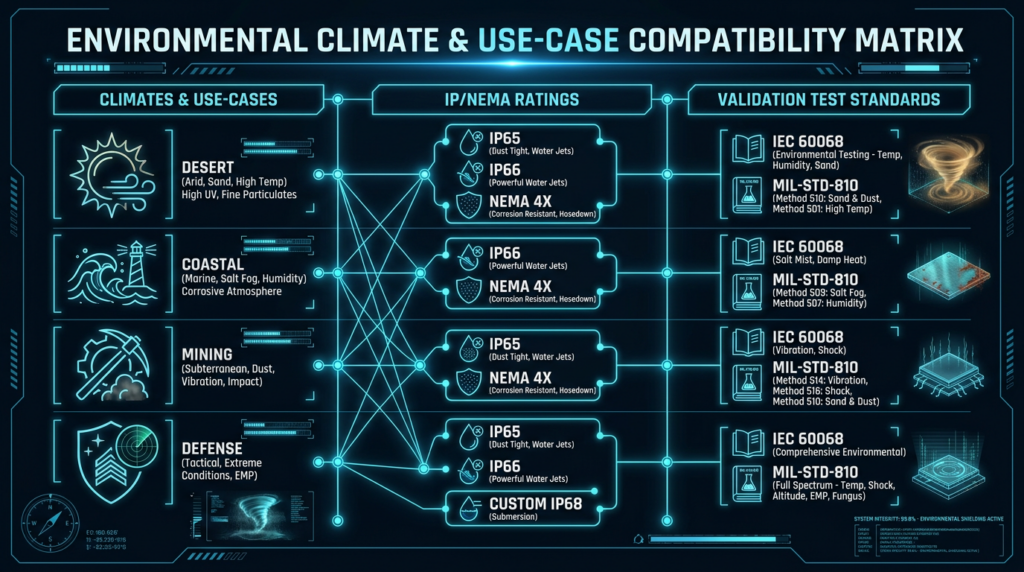
Key Takeaway: Environment-driven specification matching prevents over-engineering costs while avoiding field catastrophic failures. Desert sites demand dust-tight IP65 seals and direct solar radiation shielding; coastal sites require NEMA 4X salt spray resistance; mining sites demand MIL-STD-810 vibration dampening.
Hot-dry/desert and high-altitude
Hot-dry environments present twin challenges: extreme ambient air temperatures exceeding +50°C paired with intense direct solar radiation (solar heat load up to 1,100 W/m²). At high altitudes (>2,000 meters above sea level), reduced air density lowers heat transfer effectiveness, requiring a 10% to 15% derating of HVAC cooling capacity and air-cooled UPS heat sinks.
Required Specifications:
Double-wall container construction with reflective thermal barriers (high albedo white exterior polyurethane coating).
High-capacity, variable-speed direct-expansion (DX) in-row precision cooling units engineered for high condensing temperatures.
Multi-stage sand/dust filtration featuring self-cleaning or easily washable hydrophobic intake louvers to prevent air filter clogging.
Coastal/corrosive and flood-prone
Coastal, marine, and island operations expose metal structures to continuous sodium chloride exposure, high relative humidity (>90%), and potential storm surges or standing water. Standard galvanized steel shells deteriorate within 24 to 36 months under continuous salt-fog exposure.
Required Specifications:
Enclosure shell constructed from Corten-A weathering steel or marine-grade aluminum, treated with C5-M anti-corrosion marine epoxy coatings.
HVAC condenser coils protected by electro-coated (E-coated) or gold-fin hydrophobic anti-corrosion treatments.
NEMA 4X / IP66 sealed door gaskets with double-stage EPDM rubber seals and stainless-steel (316L) hardware.
Elevated concrete pad mounting or skid frames elevating the container base 0.5 to 1.5 meters above maximum local flood lines.
Mining vibration and defense/DR
Heavy industry mining sites and military expeditionary deployments subject data containers to severe low-frequency ground vibration, sudden mechanical impact shocks, and frequent multi-modal relocations.
Required Specifications:
Internal heavy-duty rack frames equipped with structural shock-isolation dampeners (rubber or wire-rope mounts rated for 2G to 4G transport shock).
Reinforced corner casting corner blocks conforming to ISO 1161 standards for crane lifting, flatbed trucking, and air transport.
Rapid-coupling power and signal bulkhead plates designed for tool-less field installation and teardown.
Power and cooling for off/weak-grid
Hybrid power stacks and microgrids
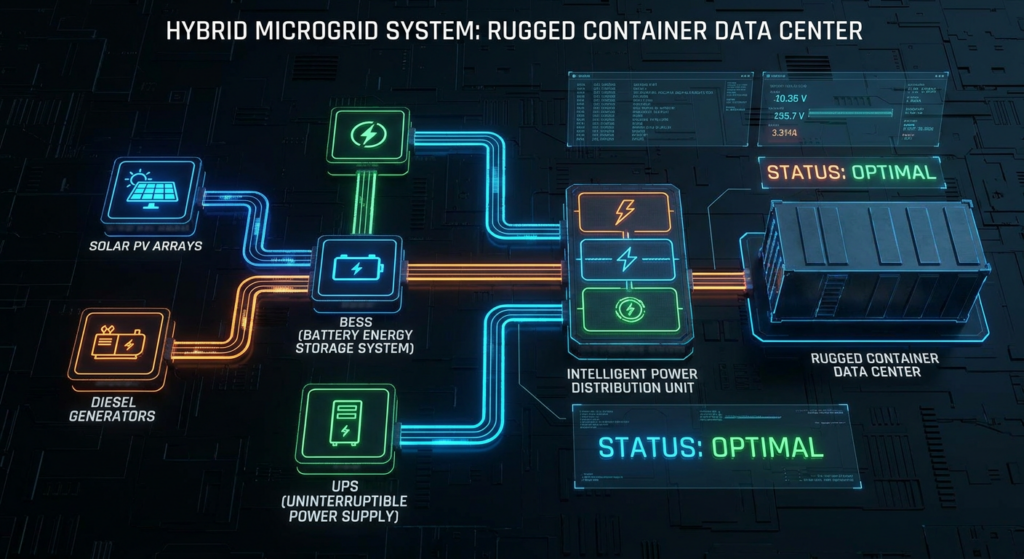
When deployed off-grid or connected to unreliable rural power grids with frequent load shedding, containerized infrastructure cannot rely on utility power. Remote facilities deploy hybrid microgrid architectures that integrate multiple energy generation and storage assets.
A resilient off-grid power stack typically comprises:
Primary Power Source: Dual prime-rated diesel or gas generators operating in auto-alternating N+1 configuration.
Renewable Energy Integration: On-site solar PV arrays feeding an intermediate DC bus.
Battery Energy Storage System (BESS): Lithium iron phosphate (LiFePO4) battery banks providing 2 to 4 hours of baseline runtime to reduce generator fuel consumption during low-load periods.
All-in-One UPS Power Modules: Modular double-conversion UPS units providing continuous power conditioning, surge absorption, and seamless power transfer during generator startup sequences.
In practice, leading manufacturers engineered specialized factory-assembled solutions for these demanding scenarios. For example, Coolnetpower’s MetaCuber containerized data center incorporates microgrid-ready power distribution buses, supporting dual-mains, generator synchronization, and direct BESS tie-ins. By combining factory-certified IP66/NEMA 4X weatherproofing with pre-validated IEC 60068 and MIL-STD-810 stress testing, these prefabricated units eliminate complex on-site electrical engineering, making them suitable for rapid edge data center deployment.
Cooling by climate and density
Cooling selection must match heat density and local water availability. Remote sites rarely have municipal water connections, rendering open cooling towers or evaporative coolers impractical due to water consumption and mineral scaling risks.
Closed-Loop DX In-Row Precision Cooling: Direct expansion (DX) units placed directly between server racks utilize refrigerant loops to absorb heat at the source. Variable-speed DC inverter compressors and EC fans automatically adjust capacity based on real-time IT load, maximizing energy efficiency under partial load conditions.
Closed-Loop Chilled Water / Liquid-Assisted Cooling: For high-density AI and HPC workloads (>20 kW per rack), container modules incorporate row-level Liquid-to-Air Heat Exchangers or Direct-to-Chip (DLC) cooling manifolds. Closed loops ensure zero ongoing water consumption.
Hot/Cold Aisle Containment: Physical rigid containment panels separate cold supply air from hot exhaust air, preventing hot-air short-circuiting and allowing supply temperatures up to 25°C without risking server hotspot creation.
Fire detection and clean-agent suppression
Because remote containers operate unstaffed, internal fire suppression must be autonomous, non-destructive to electronics, and certified against accidental discharge.
Early Detection: Very Early Smoke Detection Apparatus (VESDA) or aspirating smoke detection systems continuously sample container air, detecting microscopic combustion particles prior to visible flame formation.
Clean-Agent Extinguishing Systems: Clean gaseous agents (such as FK-5-1-12 / Novec 1230 or FM-200) flood the sealed compartment within 10 seconds of activation. These agents extinguish fires thermally without leaving residue, conducting electricity, or damaging sensitive IT circuitry.
Interlocked Safety Systems: Fire control panels automatically shut down intake/exhaust ventilation dampers, trigger emergency UPS power isolation, and send immediate out-of-band alerts prior to gas release.
Remote operations and serviceability
Key Takeaway: Unstaffed remote facilities live or die by their out-of-band telemetry and serviceability design. Comprehensive remote access via redundant satellite/cellular paths combined with modular drop-in spare parts allows non-specialized local contractors to maintain critical uptime.
Telemetry, DCIM, and out-of-band paths
Operating an unstaffed container data center requires absolute visibility into environmental, electrical, and mechanical parameters. Data Center Infrastructure Management (DCIM) platforms aggregate telemetry from hundreds of integrated sensors:
Environmental Sensors: Temperature/humidity sensors at rack top, middle, and bottom; liquid leak detection cables along cooling pipe runs and container floor perimeter.
Electrical Metrics: Real-time voltage, current, power factor, THD (Total Harmonic Distortion), and battery state-of-health (SoH) monitoring down to individual PDU outlet levels.
Out-of-Band (OOB) Connectivity: Primary telemetry routes over local optical fiber or primary microwave links. When the primary network fails, autonomous OOB hardware switches seamlessly to dual-SIM industrial 4G/5G cellular routers or low-earth-orbit (LEO) satellite terminals. This enables remote rebooting, firmware management, and diagnostic log retrieval even during full WAN outages.
Layered physical security for remote sites
Isolated containers are vulnerable to vandalism, unauthorized access, and physical tampering. A robust defense-in-depth security strategy includes:
Outer Perimeter: Reinforced outer enclosure panels rated for RC3 or RC4 intruder resistance per EN 1627 standards; tamper-proof external hinges and concealed door locks.
Access Control: Biometric fingerprint / RFID card readers with dual-factor authentication on entry doors; electronic lock handles linked to DCIM audit logs.
Surveillance & Intrusion Alarms: HD infrared IP cameras covering internal aisles and external perimeters; door contact sensors, shock vibration sensors on exterior walls, and motion detectors tied to immediate remote alarm triggers.
Maintainability, filtration, and spares
Field maintainability dictates mean-time-to-repair (MTTR) in remote locations:
Tool-Less Filter Replacement: Heavy-duty air filter racks accessible via external lockable access hatches, allowing technician filter swaps in minutes without opening the secure IT compartment.
Modular Hot-Swappable Subsystems: Modular UPS power modules, hot-swappable fan trays, and slide-out PDU bars enable fast component replacement by general maintenance personnel.
Strategic On-Site Spare Kits: Standardized spare parts stored within a dedicated interior service cabinet—including spare air filters, fan assemblies, controller boards, and sensor modules.
Procurement checklist (2024–2026)
When preparing Request for Proposal (RFP) documentation or evaluating modular infrastructure vendors, use this comprehensive technical specification checklist:
Enclosure and validation specifications
Structural Form Factor: Standard ISO 20ft / 40ft High Cube container or custom modular enclosure built to ISO 668 dimensions with ISO 1161 corner castings.
Ingress Rating: Verified minimum IP65 for desert/dust environments; IP66 or NEMA 4X for coastal/corrosive locations certified to IEC 60529 / NEMA 250.
Corrosion Protection: Corten-A weathering steel shell with C5-M marine epoxy paint system; minimum 750-hour salt spray test verification per IEC 60068-2-11.
Thermal Insulation: Composite wall/roof insulation achieving thermal transmittance U-value ≤ 0.4 W/(m²·K); fire-resistance rating EI60 / UL 120 min.
Vibration & Shock: Internal rack isolation dampeners validated against MIL-STD-810G Method 514.6 (vibration) and Method 516.6 (shock).
Power and cooling specifications
Power Architecture: Integrated double-conversion online UPS with N+1 or 2N modular redundancy; power density support from 3 kW to 15 kW per rack.
Microgrid Integration: Dual power inputs (Mains + Generator) with automated transfer switch (ATS); DC bus compatibility for Solar PV and BESS tie-ins.
Precision Cooling: Closed-loop DX in-row cooling or liquid cold-plate manifold system with EC variable-speed fans and inverter compressors; operating range −40°C to +55°C.
Airflow Management: Rigid hot-aisle or cold-aisle containment panels with automated emergency drop-down ceiling panels linked to fire alarm.
Fire Suppression: Automated VESDA aspirating smoke detection coupled with clean-agent gaseous fire suppression (FK-5-1-12 / Novec 1230 / FM-200).
Remote ops, security, and serviceability specs
DCIM & Telemetry: Pre-wired sensor bus for temperature, humidity, water leak, smoke, door status, and PDU-level power monitoring.
Out-of-Band Management: Integrated OOB management gateway with dual-SIM industrial 4G/5G cellular and LEO satellite fallback.
Physical Security: RC3/RC4 burglar-resistant locks, RFID/biometric door access, interior/exterior IP surveillance cameras with local edge recording.
Serviceability: External access air filter frames, hot-swappable UPS and cooling modules, complete electrical schematic documentation, and field spare parts kit.
Conclusion
Summary of ruggedization priorities
Deploying compute infrastructure into harsh, unstaffed outdoor environments requires an uncompromising focus on physical resilience and standardized testing. Success depends on aligning site-specific environmental threats with rigorous engineering standards:
Seal Against Environmental Threats: Choose verified IP65/IP66 or NEMA 4X enclosures to block dust, torrential rain, and corrosive salt air.
Validate via Standardized Testing: Demand certified test reports for IEC 60068 environmental testing and MIL-STD-810 vibration/shock profiles rather than relying on vendor marketing claims.
Decouple Power & Cooling from Local Utilities: Deploy hybrid microgrid power stacks (Genset + PV + BESS + UPS) and closed-loop DX or liquid cooling to ensure continuous, water-free operation.
Enable Total Remote Control: Implement out-of-band telemetry, automated clean-agent fire suppression, and hot-swappable maintainability to minimize mandatory site visits.
Next steps for evaluation, field validation, and deployment planning
To advance your remote compute project from concept to field deployment:
Conduct Site Environmental Audit: Analyze historical weather data, ambient temperature spikes, dust concentrations, atmospheric salt levels, and local grid stability at target deployment coordinates.
Select Modular Infrastructure Architecture: Review factory-prefabricated container options—such as Coolnetpower’s MetaCuber—to evaluate pre-engineered layout configurations, thermal capacities, and lead times. For more insights on evaluating deployment models, read our guide on modular data center architecture.
Issue RFP Using Engineering Checklist: Utilize the 2024–2026 Procurement Checklist above to align vendor proposals against concrete IEC, MIL-STD, IP, and NEMA performance metrics.
Schedule Factory Acceptance Testing (FAT): Require full-load thermal and electrical FAT inspection at the manufacturer’s facility prior to site shipment to verify performance before field delivery.