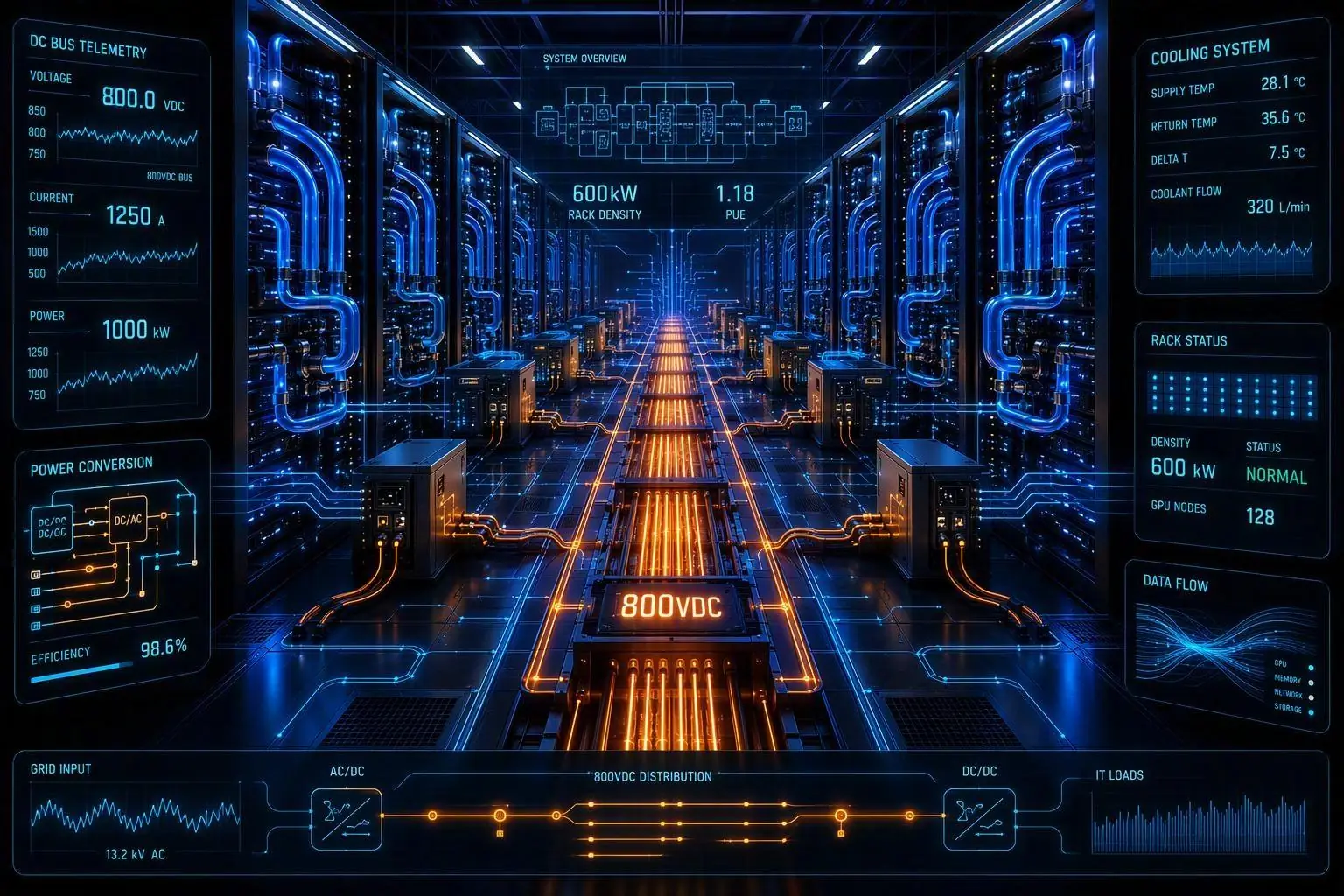
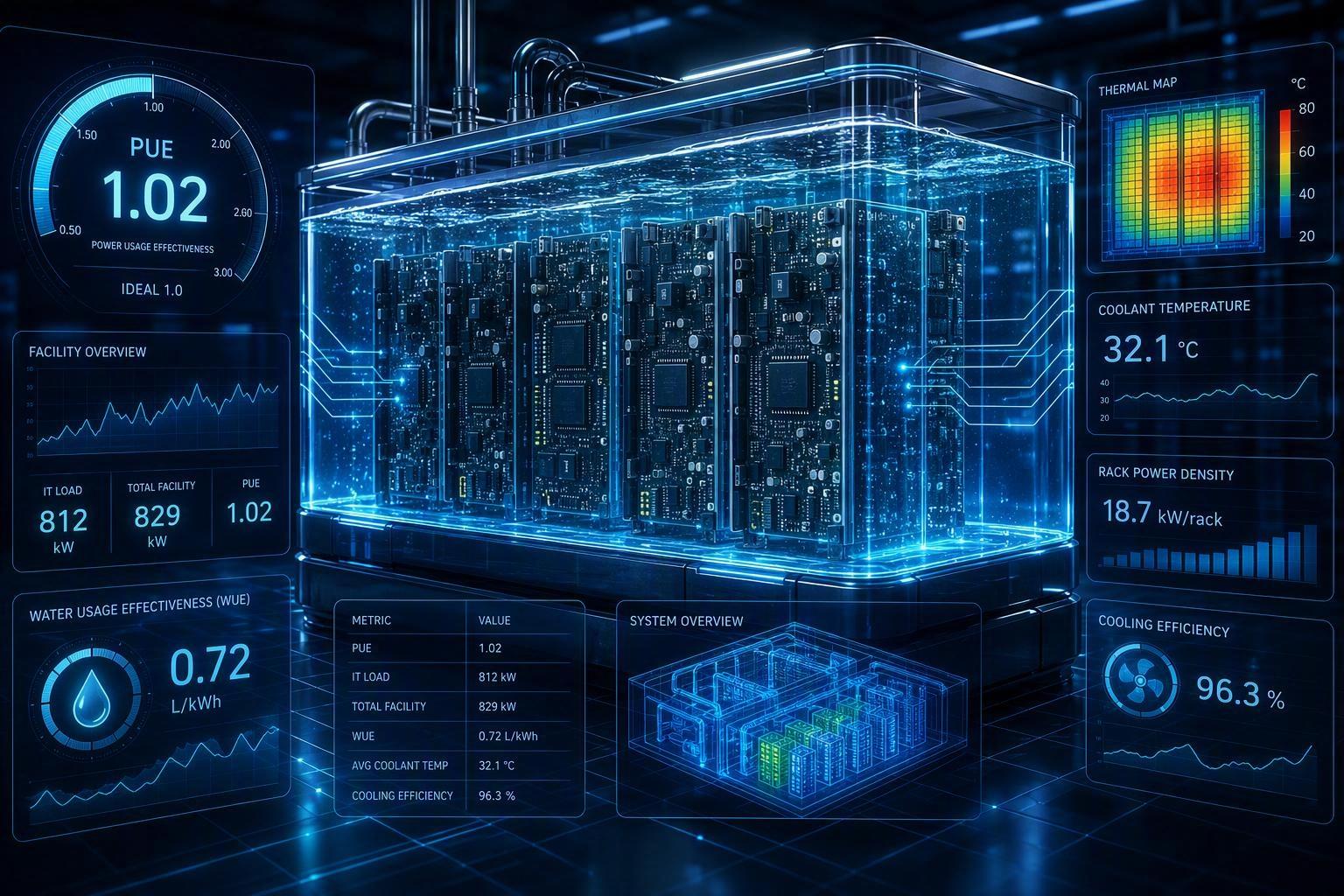
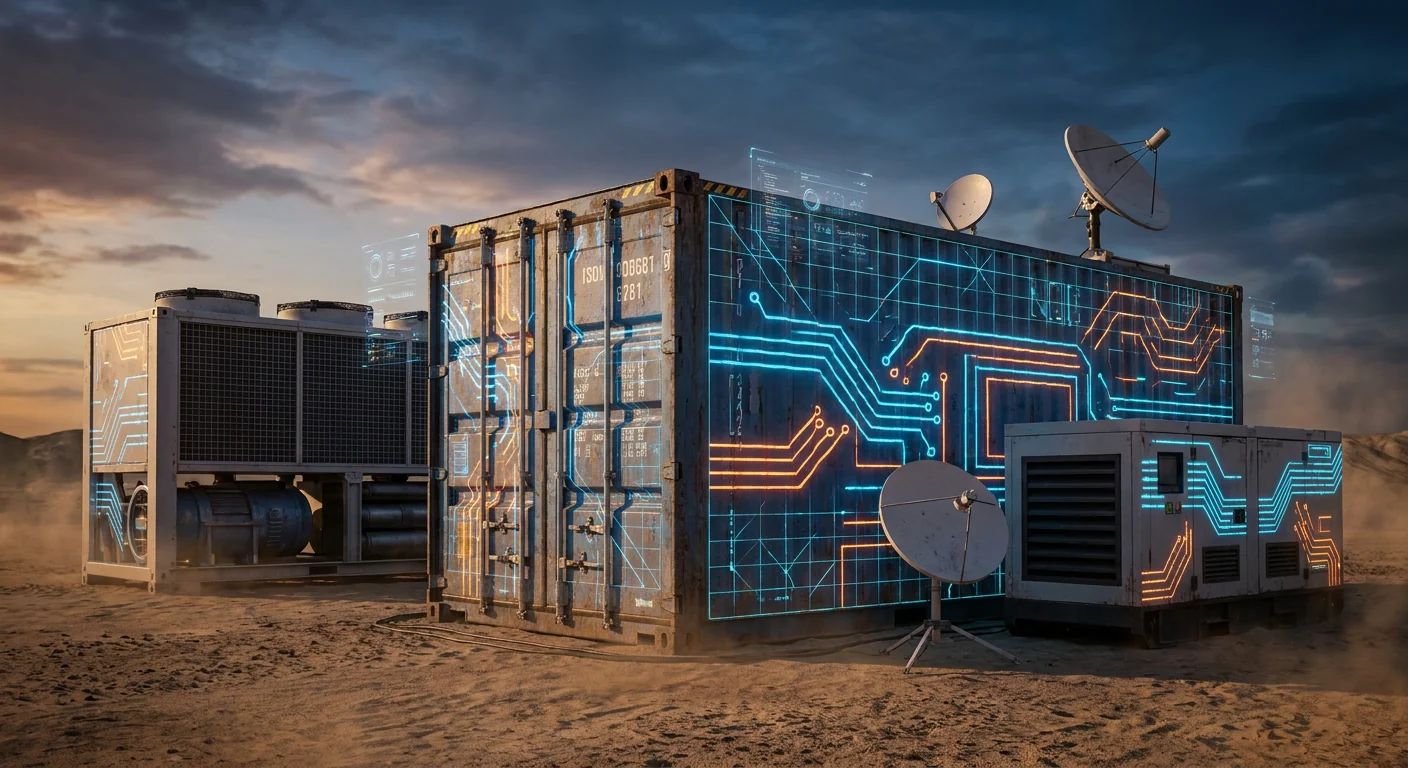
A lot of procurement confusion comes from one fact: “micro data center” is more of a packaging-and-deployment pattern than a single size threshold. Meanwhile, “traditional data center” is a facility-scale architecture—a building or dedicated room designed to run IT at meaningful scale with dedicated mechanical/electrical systems.
This article defines both terms in a way you can actually use in specifications, explains the typical architectures, and shows where standards and certifications fit. It also clarifies the edge data center vs core data center distinction, since “micro” is often deployed at the edge.
Key Takeaway: Define “micro data center” by integration + deployment model + operational intent (edge/distributed), not by a single rack-count or kW number.
Table of Contents
ToggleDefinitions you can quote
Micro data center (MDC): definition
A micro data center is a compact, self-contained, factory-integrated computing environment that brings together (1) IT equipment (servers/storage/network), plus (2) the supporting infrastructure—power protection, cooling, monitoring, and physical security—into a single enclosure or tightly integrated unit designed for rapid deployment, often at distributed or edge-adjacent sites.
This aligns with mainstream industry descriptions such as Vertiv’s explanation of micro data centers as scaled-down deployments incorporating essential components of a typical data center (Vertiv: “What Is a Micro Data Center?”) and Sunbird DCIM’s glossary framing of micro data centers as flexible, portable solutions often used at the edge (Sunbird DCIM glossary: “Micro Data Center”).
Scope boundaries (important):
A single rack in a closet isn’t automatically a micro data center. The key is whether the deployment includes a managed stack: defined power path, defined cooling approach, defined monitoring/alarms, and defined physical-security controls.
A micro data center can be installed indoors (branch office, warehouse) or outdoors/remote (telecom/industrial sites). Location is a common driver, not the definition.
Traditional data center: definition
A traditional data center is a facility (building, suite, or dedicated room) engineered to house IT systems at larger scale using facility-level electrical and mechanical plant, structured cabling, physical security, and centralized operations.
Traditional data centers may be enterprise-owned, colocation, or hyperscale. “Traditional” here refers to the facility-centric architecture: shared infrastructure supports many racks and workloads, and the design is evaluated at the facility level.
Adjacent terms (and how they relate)
These terms overlap, so it helps to pin them down:
Edge data center: a location concept—compute placed closer to users/devices to reduce latency and WAN backhaul. In an edge data center vs core data center comparison, the edge site exists to serve local users/devices; the core site exists to aggregate workloads centrally. A micro data center is often an edge deployment, but edge can also be a small room, a mini facility, or a container.
Modular data center: a construction/deployment method—prefabricated modules (IT pods, power skids, cooling skids, prefabricated rooms) assembled quickly on site.
Containerized data center: a packaging form factor—data center infrastructure integrated into a container-like enclosure for transport and rapid deployment.
Server room / comms room: a space designation. It may host IT, but it isn’t necessarily designed as a “data center” in terms of resilience, cooling discipline, monitoring, and documentation.
Architecture: what’s inside each (reference designs)
Micro data center reference architecture (cabinet-scale)
Micro data centers typically standardize the “minimum complete set” required to run IT reliably at distributed sites:
IT space: servers, storage, and network equipment in a cabinet or small rack cluster
Power path: defined input + UPS + distribution (PDU)
Cooling approach: integrated or tightly coupled cooling matched to the enclosure
Monitoring and alarms: environmental + power sensors, remote notifications
Physical security: locks, access logs, door sensors, optional CCTV integration
Here’s a simplified block view:
The “example provider” callout above is intentionally neutral. It signals that micro data centers are commonly delivered as integrated offerings, without implying any vendor is the only valid choice.
Traditional data center reference architecture (facility-scale)
In traditional facilities, infrastructure is typically designed as plant-level systems supporting a larger white-space footprint:
Micro data center vs traditional data center: size, topology, and location
Size and footprint (define without over-claiming)
It’s tempting to define a micro data center by a single number (“under X racks” or “under Y kW”). In practice, the market uses those numbers inconsistently.
A more procurement-safe approach is to define it by packaging + integration:
Is the power path explicitly defined?
Is cooling explicitly defined and matched to the enclosure?
Is monitoring and alarming defined (what sensors, what alerts, what remote access)?
Is physical security defined?
Is it factory-integrated and tested as a unit or module?
If your definition is only “small,” you’ll get quotes for everything from a rack in a room to a fully instrumented cabinet.
Topology and resilience
Traditional facilities commonly justify higher resilience designs because they host larger shared workloads and often have mature operations teams.
Micro deployments don’t have to be “less reliable,” but they’re usually right-sized for the site:
fewer staff on site
tighter power/cooling constraints
a larger number of distributed locations
What matters is that you specify the resilience intent (e.g., basic, N+1 where justified) and the operational model (unmanned site, remote-first operations).
Location and network proximity
Micro data centers are often deployed where latency, autonomy, or bandwidth makes centralized hosting impractical:
branch offices and retail sites
factories and industrial locations
telecom sites
remote campuses
Traditional data centers are usually centralized to consolidate infrastructure and operations.
Quick comparison table
Dimension | Micro data center | Traditional data center | What to specify in an RFP |
|---|---|---|---|
Definition anchor | Integration + deployment model | Facility-scale architecture | Include a definitional clause (what must be included) |
Typical footprint | Cabinet / small enclosure | Room, building, or campus | Space constraints, access constraints, noise limits |
Deployment | Factory-integrated, rapid | Build or fit-out, longer | FAT/SAT expectations; commissioning checklist |
Operations | Remote-first, many sites | Centralized ops | Monitoring, alerting, and access model |
Network intent | Near users/devices | Aggregation | Latency targets and WAN constraints |
Workloads: what usually runs where (edge vs core)
Typical edge/micro workloads
Edge sites usually host workloads that benefit from being physically close to where data is produced or decisions are made:
real-time analytics and local decisioning
IoT/sensor aggregation and filtering
video surveillance and video analytics
edge AI inference (local, latency-sensitive inference)
branch services that need to keep working during WAN degradation
Typical traditional data center workloads
Traditional data centers typically host workloads where centralization and scale provide the advantage:
shared enterprise platforms (virtualization clusters, shared services)
storage/backup and archival systems
large compute pools and consolidated operations
environments where strict facility-level governance is required
Deployment models: modular vs containerized vs “micro”
Modular data centers (prefabricated building blocks)
A modular data center is usually defined by how it’s built and delivered: prefabricated modules, factory integration, and repeatable building blocks.
You’ll sometimes see the phrase micro modular data center definition used to describe cabinet-scale (or very small) modular systems. The safest interpretation is: it’s still modular (prefabricated, repeatable), but delivered at a smaller, edge-friendly scale.
Modular can look like:
a micro/cabinet-scale unit
an IT pod with supporting power and cooling skids
a prefabricated room or series of prefabricated rooms
As a neutral example, you can see how vendors describe modular packaging and integrated infrastructure in offerings such as MetaRow modular data center (linked as an example, not a recommendation).
Containerized data centers
A containerized data center emphasizes transportability and rapid deployment in a container-like enclosure. It’s often used when the site is remote, time-constrained, or needs a relocatable solution.
In a containerized data center vs modular data center comparison, “containerized” describes a specific form factor (container-style packaging), while “modular” describes a delivery method (prefabricated building blocks). A containerized data center can be modular, but modular data centers don’t have to be containerized.
Micro data center as a packaging pattern
A micro data center can be modular or containerized, but it doesn’t have to be either.
If you’re writing a specification, a practical way to avoid ambiguity is to:
define micro data center by minimum included subsystems (power, cooling, monitoring, security)
define modular/containerized as optional packaging requirements
For readers who want a vendor example of a cabinet-style integrated micro data center, Coolnetpower’s internal definition page is a useful reference point: Coolnetpower: “What Is an All‑in‑One Smart Micro Data Center?”.
Management and monitoring: how distributed sites change the approach
Distributed micro sites change the operational problem. You’re no longer managing one data center—you’re managing a fleet.
Common management layers
DCIM (Data Center Infrastructure Management): fleet-level visibility into power, cooling, capacity, and environment.
BMS/BAS (Building Management/Automation System): building/facility controls (where a building system exists).
Remote management (including out-of-band): remote access for IT devices and edge applications.
Pro Tip: In specs for distributed sites, define the alarm model (thresholds, escalation, retention, and remote access) as clearly as you define the electrical single-line.
Standards and certifications: what applies (and what doesn’t)
Standards are useful in definitional content because they force clarity about scope. But it’s important to be honest about what each framework is actually describing.
Facility standards and framework families
Commonly referenced facility standards/frameworks include:
EN 50600 (European framework for data center facilities and infrastructure)
ISO/IEC 22237 (international standard family for data center facilities and infrastructure)
TIA-942 (telecommunications and data center infrastructure standard)
A practical starting point for understanding how ISO positions data centre standardization is ISO’s overview page on ISO standards for data centres.
Availability/topology lens: Uptime Institute Tier
The Uptime Institute’s Tier model is widely used to describe facility resilience/topology and certification programs. For a canonical description, see Uptime Institute: Tier Classification System.
How this matters for micro sites:
Micro/edge sites can still align to resilience goals, but they’re often optimized for fleet operations and right-sized redundancy.
Use the Tier concept as a lens for resilience thinking, not necessarily as a blanket requirement to “certify every edge cabinet.”
Security programs (context)
Security is often evaluated via management systems such as ISO/IEC 27001 (ISMS). That’s not a “data center architecture,” but it does matter for procurement language when sites are distributed.
Common misconceptions (worth correcting early)
“Micro means low reliability.” Not necessarily. Reliability depends on power/cooling design intent, monitoring, maintenance, and site operations.
“Micro means containerized.” Not necessarily. Containerized is a packaging choice; micro is often cabinet-scale.
“Traditional is always better.” Not if latency, autonomy, or bandwidth constraints are the primary driver.
A practical procurement checklist (definition → spec)
If you want your RFP to avoid ambiguity, define these items explicitly:
Definition clause: What subsystems must be included (power, cooling, monitoring, security), and what counts as “integrated.”
Monitoring/alarms: sensor list, thresholds, escalation path, retention, and remote access method.
Power path intent: baseline redundancy expectation (e.g., N vs N+1) and runtime assumptions.
Serviceability: access clearances, hot-swap requirements, and maintenance windows.
Documentation pack: drawings, BOM, test reports, commissioning checklist, and change-control expectations.
Standards alignment: which framework you are using as a reference (EN 50600 / ISO/IEC 22237 / TIA-942 / Tier lens) and why.
Where Coolnetpower fits (neutral example)
Many suppliers provide packaged micro and modular form factors. If you want a concrete example while keeping your evaluation vendor-neutral, you can review a cabinet-scale micro data center offering such as the MetaRack micro data center cabinet and compare its declared subsystems against your own definition clause.
Next steps
If you’re building an RFP or standardizing edge deployments, the fastest way to avoid “apples vs oranges” quotes is to lock the definition first.
Request: a one-page “definition-to-spec” checklist (what to include in your MDC spec) or a commissioning questions list you can reuse across sites.
FAQ
What is a micro data center versus a traditional data center?
A micro data center is a compact, factory-integrated unit that bundles IT equipment with power, cooling, monitoring, and physical security—often for distributed/edge sites. A traditional data center is a facility engineered to host IT at larger scale with building-level electrical and mechanical plant and centralized operations.
How do size, topology, and location differ?
Micro deployments are typically cabinet-scale and optimized for rapid, repeatable deployment across many locations. Traditional facilities are larger and designed around facility plant and centralized operations. Topology and redundancy are design choices in both, but traditional facilities more commonly justify dual-path and higher redundancy due to the scale and criticality of centralized workloads.
Which workloads typically run at the edge?
Edge/micro sites commonly run low-latency processing, local analytics, IoT filtering, video analytics, and edge AI inference—workloads where sending all data to a central site adds latency or bandwidth cost.
What are common deployment models (modular, containerized)?
Modular refers to prefabricated building blocks assembled on site; it can be cabinet-scale, pod/room-scale, or larger. Containerized refers to a transportable, container-like enclosure. Micro data centers may be modular or containerized, but the term “micro” is best defined by integration and deployment intent, not packaging alone.
How do management and monitoring approaches differ?
Traditional data centers are often managed as a single site with centralized operations and integrated facility plant. Micro/edge deployments are managed as a fleet: remote monitoring (often DCIM), standardized alerting, and remote access matter more because sites are distributed and frequently unmanned.
What standards or certifications apply to each?
Facility frameworks like EN 50600, ISO/IEC 22237, and TIA-942 are commonly referenced for facility design and infrastructure expectations. Uptime Institute Tier is commonly used as an availability/topology lens. For micro/edge, these are often applied pragmatically—used to define minimum expectations and operational discipline rather than to pursue full facility-grade certification at every site.